


Page 9 - hypertension_newsletter3
P. 9
REFLECTIONS                                                                                                                                                                                                                                   rtensio n
Hypertension Global Newsletter #3
                                                                                                                                                                                                                                              n oisnetr
                                                                                                                                                                                                                                          Hype

hypertension. Both nocturnal hypertension and nondipping BP pattern have been associated with an increased risk of HMOHDype,

and adverse CV and kidney outcomes.

There has been some controversy and confusion regarding the optimal timing of dosing for antihypertensive medications, with
most clinical trials administering in the morning, but more recent studies suggesting that bedtime administration may be more
protective of CV outcomes. This position paper by the International Society of Hypertension (ISH) reviewed the published
evidence on the clinical relevance of diurnal variation in BP and the timing of antihypertensive drug treatment with the aim to
provide consensus recommendations for clinical practice.

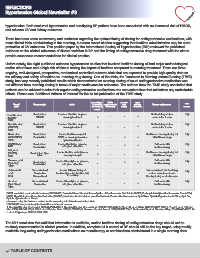
Unfortunately, the eight published outcome hypertension studies that involved bedtime dosing all had major methodological
and/or other flaws and a high risk of bias in testing the impact of bedtime compared to morning treatment. There are three
ongoing, well-designed, prospective, randomized controlled outcome trials that are expected to provide high-quality data on
the efficacy and safety of bedtime vs. morning drug dosing. One of the trials, the Treatment in Morning versus Evening (TIME)
study, has very recently published results which demonstrated an evening dosing of usual antihypertensive medication was
not different from morning dosing in terms of major cardiovascular outcomes. The authors from the TIME study concluded that
patients can be advised to take their regular antihypertensive medications at a convenient time that minimizes any undesirable
effects. Please see ‘Additional Articles of Interest’ for link to full publication of the TIME study.

                                                                        Randomized  Same          Double-    Hard                                         Risk
                                                                                                   blind   primary                                      of biasa
        Study/         Study design                   Arms              to bedtime drugs bedtime  design   outcome  Study design issues
          year                                                                                                                                           High
                      Randomized     2 arms: =1 bedtime drugs vs.       vs. morning & morning
Hermida, et al.          PROBE              morning treatment                                                                                            High
(HYGIA)1                                                                dosing                                                                           High
2019                  Randomized
                         PROBE                                          +-                        -                          Not fixed drug choices      High
Hermida, et al.                                                                                            + same in the 2 arms                          High
(MAPEC)2              Randomized                                                                                                                         High
2010                  Double-blind   2 arms: =1 bedtime drugs vs.       +           -             -                          Not fixed drug choices      High
                                            morning treatment                                              + same in the 2 arms
Black, et al.         Randomized                                                                                                                         High
(CONVINCE)3           Double-blind       2 arms: Bedtime verapamil      +           -             +                   Bedtime vs. morning dosing but
2003                                   COER vs. morning atenolol or     -           -             +        + with different drugs
                  Randomized Open                                       +           -             -
HOPE Study4                label             hydrochlorothiazide        -           -             +        +        Both arms with
2000                                                                    -           -             -                 bedtime dosing
                      Randomized       2 arms: Ramipril vs. placebo,    -           -             -
Tatti, et al.         Double-blind          both given at bedtime                                                     Bedtime vs. morning dosing but
(FACET)5                                                                                                   - with different drugs
1998               Not randomized     2 arms: Bedtime amlodipine vs.
                      Prospective              morning fosinopril                                                                Both arms with
Staessen, et al.     Observational                                                                         + bedtime dosing
(Syst-Eur)6                          2 arms: Nitrendipine vs. placebo,
1997               Not randomized           both given at bedtime                                                      Not randomized. Not fixed drug
                      Prospective                                                                          + choices same in each arm.
Sobiczewski,                             4 arms: Different timing of
et al.7                              treatment (morning, bedtime, bid,                                                Morning dosing vs.all other arms
2014
                                                   tid or more)                                            +        Both arms with
Liu, et al.                                                                                                         bedtime dosing
(Syst-China)8                        2 arms: Nitrendipine vs. placebo,
1998                                        both given at bedtime

COER, controlled-onset extended-release; CONVINCE, Controlled Onset Verapamil Investigation of Cardiovascular End Points; FACET, Fosinopril Amlodipine Cardiovascular Events Trial;
HOPE, Heart Outcomes Prevention Evaluation; MAPEC, Monitorización Ambulatoria para Predicción de Eventos Cardiovasculares; Syst-China, Systolic Hypertension in China; Syst-Eur,
Systolic Hypertension in Europe.
aAssessed using the Cochrane revised tool for assessing risk of bias in randomized trials.
bCONVINCE was prematurely terminated for commercial reasons.
1. Hermida RC, et al. Eur Heart J. 2020;41:4565-4576; 2. Hermida RC, et al. Chronobiol Int. 2010;27:1629-1651; 3. Black HR, et al. JAMA. 2003;289:2073-2082; 4. Yusuf S, et al. N Engl J
Med. 2000; 342:145-153; 5. Tatti P, et al. Diabetes Care. 1998;21:597-603; 6. Staessen JA, et al. Lancet. 1997;350:757-764; 7. Sobiczewski W, et al. Pharmacol Rep. 2014;66:448-452; 8. Liu
L, et al. J Hypertens. 1998;16:1823-1829.

The ISH concludes that until that information is available, routine bedtime dosing of antihypertensive drugs should not be
routinely recommended in clinical practice. In addition, complete 24 h control of BP should still be the key target, using readily
available long-acting antihypertensive medications as monotherapy or combinations administered in a single morning dose.

TABLE OF CONTENTS

